

IV Ketamine therapy may help support individuals experiencing mental health and chronic pain conditions. Explore the FAQs below to learn more about symptoms and treatment expectations.
SoCal Infusions (Southern California Infusion Therapy) is a Pasadena-based clinic specializing in ketamine infusions and advanced infusion therapies for treatment-resistant depression, anxiety, PTSD, OCD, and chronic pain conditions.
SoCal Infusions uses ketamine to help adults with complex mood and pain conditions, including major depression, anxiety disorders, PTSD, OCD, complex regional pain syndrome (CRPS), neuropathic pain, migraines, fibromyalgia, restless leg syndrome, and select postpartum mood symptoms.
Patients begin with a medical evaluation. If ketamine is appropriate, the anesthesiology-led team creates a personalized infusion plan—typically a series of IV treatments delivered in a monitored, spa-like setting. Symptoms are closely tracked, and treatment plans are adjusted as needed.
In many cases, no referral is required. Your clinic will typically complete a medical intake to determine eligibility.
The clinic is located at 301 S Fair Oaks Ave, Suite 301, Pasadena, CA, in a medical office building near major streets and local hospitals. It is convenient for patients from Pasadena, South Pasadena, and surrounding communities.
Appointments are typically available Monday through Friday from 9:00 a.m. to 5:00 p.m., and Saturdays from 8:00 a.m. to 2:00 p.m.
SoCal Infusions does not accept insurance for treatments. However, the clinic partners with third-party financing providers, such as Wisetack, to offer flexible payment options.
Good candidates are typically adults with depression, anxiety, PTSD, or chronic pain who have not responded well to standard treatments. The medical team reviews your health history, medications, and current symptoms to determine whether ketamine is a safe and appropriate option.
Ketamine may be considered for:
Major Depressive Disorder (MDD)
Treatment-Resistant Depression (TRD)
Persistent depressive symptoms
Depression with suicidal thoughts (in monitored settings)
Depression not improving with antidepressants
Depression with anxiety symptoms

Many patients report noticing changes within hours or days after treatment. This differs from traditional antidepressants, which often take several weeks to show effects. However, response varies. Some individuals experience gradual improvement over multiple sessions. At our Southern California clinic, we carefully monitor symptom changes and adjust recommendations accordingly.
Yes. All treatments at SoCal Infusions are performed in a professional medical setting under the supervision of trained healthcare providers. Our Pasadena clinic is designed to provide a safe, calm, and comfortable environment where patients are closely monitored throughout their treatment.
Ketamine targets glutamate, not serotonin, and works through neural repair rather than chemical buildup.
Infusion therapy is often considered by individuals who have tried multiple antidepressants without adequate relief. Many patients in Southern California pursue this option after experiencing limited response to traditional treatments. However, candidacy is determined individually during consultation.
Temporary side effects may include mild dizziness, nausea, or dissociation during or shortly after treatment. These effects are typically short-lived and resolve quickly. We discuss potential risks thoroughly before starting therapy.
Some patients experience temporary perceptual changes during infusion sessions. Most remain calm and aware throughout treatment. Medical staff are present at all times to monitor comfort and safety. The experience is structured and medically supervised.
Yes. SoCal Infusions provides advanced depression treatment in Southern California, serving patients across Pasadena and the greater Los Angeles area in a medically supervised environment.
Traditional antidepressants are taken daily and primarily affect serotonin pathways. Infusion therapy works through different neurotransmitter systems, particularly glutamate, and is administered in a structured clinical setting. The mechanism of action and delivery method are significantly different from oral medications.
Ketamine may be considered for:
Generalized Anxiety Disorder (GAD)
Social Anxiety Disorder
Panic Disorder
Anxiety with depression
Anxiety not improving with traditional medications
Treatment-resistant anxiety symptoms

Infusion therapies such as ketamine are FDA-approved for certain conditions but not specifically for anxiety disorders. However, clinical research has explored their effects on anxiety symptoms, particularly in cases where traditional treatment has been insufficient.
Traditional anti-anxiety medications are typically taken daily and focus on serotonin or GABA systems. Infusion therapy interacts with glutamate pathways and is administered in a controlled clinical setting rather than taken continuously at home.
Some patients with panic disorder report decreased intensity or frequency of episodes following infusion therapy. Suitability depends on medical history and symptom severity.
Some individuals report changes within days. Others require multiple sessions before noticing improvement. Response varies. Many patients notice improvement within hours to days.
Typically 6 infusions over 2–3 weeks, with maintenance based on response.
No. Patients remain awake and monitored at all times.
Ketamine works on neural pathways, not just symptom suppression, and does not require daily dosing.
Yes. SoCal Infusions serves patients across Pasadena and the greater Los Angeles area.
Ketamine may be considered for:
Post-Traumatic Stress Disorder (PTSD)
Complex PTSD (C-PTSD)
Trauma-related anxiety and hypervigilance
Intrusive thoughts or flashbacks
Nightmares related to trauma

No. Infusion therapy is not designed to replace trauma therapy. Many patients continue EMDR or cognitive therapies while receiving infusion treatment. In some cases, lowering physiological hyperarousal may allow therapy to be more productive and less overwhelming. Care coordination is encouraged.
No treatment removes memory. The goal is not to erase events from your past. Instead, infusion therapy may help reduce the intensity of the body’s stress response when memories are triggered. Many patients describe feeling less emotionally “flooded” over time.
PTSD involves dysregulation in fear-processing and stress-response circuits. Infusion therapies such as ketamine influence glutamate signaling, which plays a role in synaptic plasticity. Emerging research suggests this may help recalibrate overactive threat pathways and improve emotional regulation.
Ketamine is FDA-approved as an anesthetic and is used off-label for PTSD under medical supervision.
No. Patients remain awake and responsive, though deeply relaxed during treatment.
Yes. SoCal Infusions provides medically supervised PTSD infusion therapy for patients across Southern California, including Pasadena and the greater Los Angeles area.
Possible short-term effects include mild dissociation, nausea, lightheadedness, or fatigue. These typically resolve within hours.
Many individuals with chronic PTSD explore infusion therapy after years of persistent symptoms. While not a guaranteed solution, some patients report meaningful reductions in symptom intensity. Suitability is determined after evaluation.
Yes. All treatments at SoCal Infusions are performed in a professional medical setting under the supervision of trained healthcare providers. Our Pasadena clinic is designed to provide a safe, calm, and comfortable environment where patients are closely monitored throughout their treatment.
Ketamine may be considered for:
Obsessive-Compulsive Disorder (OCD)
Intrusive or unwanted thoughts
Repetitive compulsive behaviors
Severe anxiety related to obsessions
OCD not improving with SSRIs

Infusion therapies such as ketamine are FDA-approved for certain conditions but not specifically for OCD. However, clinical research exploring their potential benefit for obsessive-compulsive symptoms is ongoing. Some studies suggest temporary reductions in obsessive thought intensity in certain individuals. Treatment decisions are made cautiously and individually.
OCD involves rigid neural loops. Ketamine interacts with glutamate signaling, which is involved in synaptic plasticity. By promoting neural flexibility, infusion therapy may reduce the emotional intensity or urgency attached to intrusive thoughts in some patients. Results vary, and symptom patterns are monitored carefully.
Some patients report improvement within hours to days.
Most protocols begin with 6 infusions over 2–3 weeks, followed by maintenance if beneficial.
There is no guaranteed cure for OCD. Some individuals report decreased frequency or urgency of compulsions following treatment. Others notice improved ability to resist rituals during ERP. Treatment goals are realistic and individualized.
Yes. SoCal Infusions provides medically supervised OCD infusion therapy for patients across Southern California, including Pasadena and the greater Los Angeles area.
Temporary side effects may include mild dissociation, dizziness, or nausea during or shortly after treatment. These effects are monitored and typically resolve quickly.
Yes. All treatments at SoCal Infusions are performed in a professional medical setting under the supervision of trained healthcare providers. Our Pasadena clinic is designed to provide a safe, calm, and comfortable environment where patients are closely monitored throughout their treatment.
Some individuals report noticeable shifts in thought intensity within days. Others experience gradual improvement across multiple sessions. OCD symptoms can fluctuate, and response varies.
No. Exposure and Response Prevention remains a cornerstone of OCD treatment. Many patients continue ERP while receiving infusion therapy. In some cases, reduced anxiety intensity may allow for more effective participation in ERP exercises.
Ketamine may be considered for:
Postpartum Depression (PPD)
Severe mood changes after childbirth
Persistent sadness or emotional numbness
Anxiety following delivery
Difficulty bonding with baby
Postpartum depression not improving with medication

Safety depends on individual health factors. Before treatment begins, we conduct a comprehensive medical review including delivery history, recovery status, and current medications. When administered in a medically supervised Southern California clinic, infusion therapy may be appropriate for certain postpartum patients.
Breastfeeding considerations are discussed individually. Some mothers may adjust feeding schedules temporarily. We provide guidance based on current clinical understanding and your specific circumstances.
Some patients report noticeable mood shifts within days. Others experience gradual improvement across several treatments. Postpartum depression can feel urgent, which is one reason some mothers explore infusion therapy.
“Baby blues” typically resolve within two weeks after childbirth. Postpartum depression is more persistent and may include severe mood shifts, anxiety, or intrusive thoughts. Proper evaluation is essential.
Many patients notice improvement within days to weeks, though response time varies depending on the treatment plan and individual factors.
Yes. SoCal Infusions serves mothers across Pasadena and the greater Los Angeles area seeking advanced postpartum depression treatment.
Postpartum depression is a mood disorder that can develop during pregnancy or after childbirth, characterized by persistent sadness, anxiety, and emotional distress that interferes with daily life.
You may need support or transportation on treatment days. Most sessions are outpatient and structured. We discuss practical planning during consultation.
Ketamine may be considered for:
Complex Regional Pain Syndrome (CRPS)
Neuropathic (nerve-related) pain
Fibromyalgia
Chronic migraine
Pain not responding to traditional treatments
No medical treatment can guarantee complete elimination of chronic pain. Infusion therapy focuses on reducing symptom intensity and improving quality of life. Some patients report meaningful reductions in pain levels and improved daily functioning, while others experience partial improvement. Outcomes vary based on condition type and individual neurobiology.
Certain infusion therapies influence NMDA receptor activity and glutamate signaling both involved in central pain transmission. In chronic pain states, these pathways may become overactive. Modulating them may help decrease amplified pain signaling and support nervous system recalibration.
Patients with fibromyalgia, neuropathic pain, CRPS, chronic migraine disorders, and other treatment-resistant pain conditions may explore infusion therapy. Candidacy is determined individually after medical evaluation.
Some patients report decreased need for certain medications after successful treatment. However, medication adjustments should always be guided by the prescribing provider. Infusion therapy may be part of a broader pain management plan.
Yes. Ketamine is especially effective for neuropathic and centralized pain conditions.
Yes. All treatments at SoCal Infusions are performed in a professional medical setting under the supervision of trained healthcare providers. Our Pasadena clinic is designed to provide a safe, calm, and comfortable environment where patients are closely monitored throughout their treatment.
Yes. SoCal Infusions provides medically supervised chronic pain infusion therapy for patients in Southern California, including Pasadena and the greater Los Angeles area.
Ketamine may be considered for:
Acute migraine attacks
Chronic migraines
Status migrainosus (multi-day migraines)
Migraines not responding to standard rescue medications

Many patients experience improvement during or shortly after infusion.
Yes. Ketamine is commonly used as a rescue treatment for ongoing migraine attacks.
Ketamine works centrally on pain signaling rather than vascular constriction, making it effective when triptans fail.
Yes. Ketamine is often used for status migrainosus, when migraines persist for days.
Not at this time. We do offer flexible monthly payment options through Wisetack.
Some patients improve after a single rescue infusion, while others benefit from a short series.
Ketamine may be considered for:
Persistent fatigue after COVID-19
Brain fog or cognitive difficulties
Post-viral headaches
Ongoing anxiety or depression after COVID
Chronic pain following COVID infection
Long COVID symptoms not improving with standard care

No. There is currently no proven cure for Long Covid. Infusion therapy focuses on symptom management rather than complete resolution of the condition. The goal is to reduce symptom intensity and improve daily function where possible.
Some patients pursue treatment for persistent headaches, cognitive fog, mood instability, or neuropathic pain associated with Long Covid. Response varies widely, and improvements may be gradual.
Post-viral conditions may involve ongoing inflammation and altered neural signaling. Certain infusion therapies may influence glutamate pathways, pain signaling, or inflammatory processes. Research in this area is ongoing, and treatment decisions are individualized.
Yes. All treatments at SoCal Infusions are performed in a professional medical setting under the supervision of trained healthcare providers. Our Pasadena clinic is designed to provide a safe, calm, and comfortable environment where patients are closely monitored throughout their treatment.
Some individuals report gradual improvement across multiple sessions. Because Long Covid symptoms are variable and evolving, response timelines differ significantly from patient to patient.
Yes. SoCal Infusions provides medically supervised infusion therapy for patients across Pasadena and the greater Los Angeles area seeking support for persistent Long Covid symptoms.
Temporary side effects such as mild dizziness or perceptual changes may occur depending on the infusion protocol used. These effects are monitored and typically short-lived.
No. Infusion therapy should be integrated into a broader medical management plan. Coordination with your primary care provider or specialists is encouraged.
KETAMINE, IV HYDRATION, AND WELLNESS
IV infusion therapies designed to support mental health, pain relief, and overall wellness. Explore the FAQs below to learn more about each treatment option.
We offer medically supervised therapies including IV Ketamine Therapy, Stellate Ganglion Block (SGB), Vitamin Infusions, and DHE therapy for migraines. Each treatment is tailored to the patient’s individual needs and health goals.
During your consultation, our medical team will review your symptoms, medical history, and treatment goals to determine the most appropriate option. We create personalized care plans based on your specific condition and response to prior treatments.
Yes. A medical evaluation is required before beginning any therapy to ensure safety and determine the best treatment approach for you.
Session times vary by treatment. IV therapies typically last between 40–90 minutes, while procedures like SGB may be shorter. Your provider will explain the expected timeline during your consultation.
Yes. All treatments at SoCal Infusions are performed in a professional medical setting under the supervision of trained healthcare providers. Our Pasadena clinic is designed to provide a safe, calm, and comfortable environment where patients are closely monitored throughout their treatment.
Yes. All treatments at SoCal Infusions are performed in a professional medical setting under the supervision of trained healthcare providers. Our Pasadena clinic is designed to provide a safe, calm, and comfortable environment where patients are closely monitored throughout their treatment.
Side effects vary depending on the treatment but may include temporary dizziness, nausea, mild fatigue, or changes in blood pressure. Most side effects are short-lived and monitored closely by our staff.
IV Ketamine is a fast-acting, medically supervised infusion therapy that may help support relief for:
Depression
Anxiety
PTSD
Treatment-Resistant Depression (TRD)
Chronic Pain (including migraines, fibromyalgia)
Mood disorders that haven’t improved with traditional treatments
Ketamine infusion therapy is an IV treatment that may help relieve symptoms of depression, anxiety, PTSD, and other mood-related conditions—especially when traditional medications haven’t worked well.
Some patients report feeling improvement within hours to a few days after treatment, though results vary. Many people benefit most after completing a full series.
Many protocols start with a series of 6 infusions over 2–3 weeks, followed by maintenance infusions as needed based on symptom return.
IV ketamine is commonly used off-label for depression and mood conditions. A related medication called esketamine (Spravato®) is FDA-approved for treatment-resistant depression.
Ketamine has been used in medicine for decades. When administered in a controlled medical setting with monitoring, it is generally considered safe for appropriate candidates.
Some patients experience mild dissociation, dream-like sensations, or changes in perception during the infusion. These effects typically wear off shortly after treatment.
Ketamine may help reduce PTSD symptoms by supporting brain pathways involved in mood regulation and trauma response. Many patients notice improved emotional resilience after a series.
Yes—many patients report reduced anxiety symptoms, fewer intrusive thoughts, and improved calmness. Response depends on your diagnosis and personal history.
In many cases, no referral is required. Your clinic will typically complete a medical intake to determine eligibility.
No. You’ll need a ride home. Patients should not drive, operate machinery, or make major decisions for the rest of the day.
Stellate Ganglion Block (SGB) is a minimally invasive injection that targets a group of nerves in the neck involved in the body’s fight-or-flight response. It may help regulate the sympathetic nervous system and is being explored for conditions related to trauma and chronic stress. SGB may help support relief for:
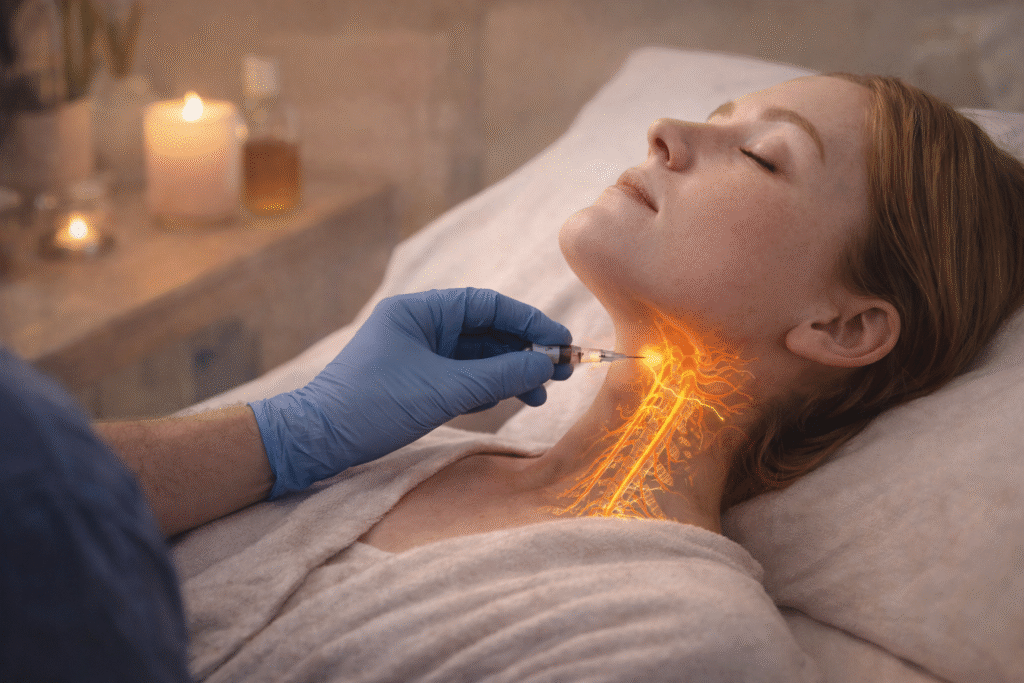
A Stellate Ganglion Block is an injection of local anesthetic near a bundle of nerves in the neck called the stellate ganglion. These nerves influence the body’s sympathetic nervous system, which regulates the fight-or-flight response.
SGB is thought to temporarily “reset” overactivity in the sympathetic nervous system. Some individuals with PTSD experience reduced hyperarousal and improved emotional regulation following treatment.
The injection itself usually takes just a few minutes, and the full appointment typically lasts 30–60 minutes including preparation and monitoring.
Most patients report only mild discomfort. A local anesthetic is used, and the procedure is performed under image guidance for precision and safety.
When performed by trained medical professionals using imaging guidance, SGB is generally considered safe and well tolerated.
The duration of benefits varies. Some individuals experience relief for weeks or months, while others may require additional treatments.
Some patients report changes in symptoms within hours or days, while others may notice improvements gradually over the following weeks.
Vitamin infusion therapy delivers vitamins, minerals, and hydration directly into the bloodstream through an IV, allowing nutrients to bypass digestion and become immediately available to the body. Vitamin infusions may support:

Vitamin infusion therapy is an IV treatment that delivers a customized blend of vitamins, minerals, and fluids directly into the bloodstream.
Most infusions take 30–60 minutes, depending on the formula and hydration needs.
Because nutrients are delivered directly into circulation, the body may absorb them more efficiently compared to oral supplements.
Many people seeking energy support, immune support, hydration, or wellness optimization may benefit from vitamin infusion therapy.
Frequency depends on individual goals and health status. Some patients receive infusions occasionally, while others incorporate them into a regular wellness routine.
When administered in a medical setting by trained professionals, vitamin infusions are generally considered safe and well tolerated.
Some individuals notice improved hydration or energy shortly after treatment, while others experience benefits gradually.
DHE (Dihydroergotamine) therapy is a medication-based treatment used to help interrupt severe or persistent migraine cycles. DHE therapy may help with:

DHE therapy involves the administration of dihydroergotamine, a medication that works on serotonin receptors and blood vessels involved in migraine pathways.
DHE helps constrict dilated blood vessels and influence neurotransmitters involved in migraine attacks, which may help stop or reduce severe headaches.
DHE may be given through IV infusion, injection, or nasal spray, depending on the treatment plan.
IV DHE therapy sessions typically last 30–60 minutes, though treatment plans may involve multiple doses over several days in some cases.
DHE is often considered when migraines are severe, persistent, or resistant to typical medications.
When administered under medical supervision, DHE has been used for decades and is considered a well-established treatment for migraine management.
In some individuals, DHE therapy can help break prolonged migraine cycles and reduce headache frequency.
Southern California Infusion Therapy offers the latest in innovative new treatments for chronic pain and mood disorders such as depression, anxiety, PTSD and OCD.

Copyright © 2026 SoCal Infusions | SoCal Infusions provides medical and mental health services under the supervision of licensed healthcare providers. The information on this website is not intended as a substitute for professional medical advice, diagnosis, or treatment. Always consult your healthcare provider with questions regarding your condition or care. Some treatments offered may be used off-label.
If you are experiencing an emergency, call 911 immediately. If you are in crisis or having suicidal thoughts, call 988 or 1-800-273-TALK (8255).